
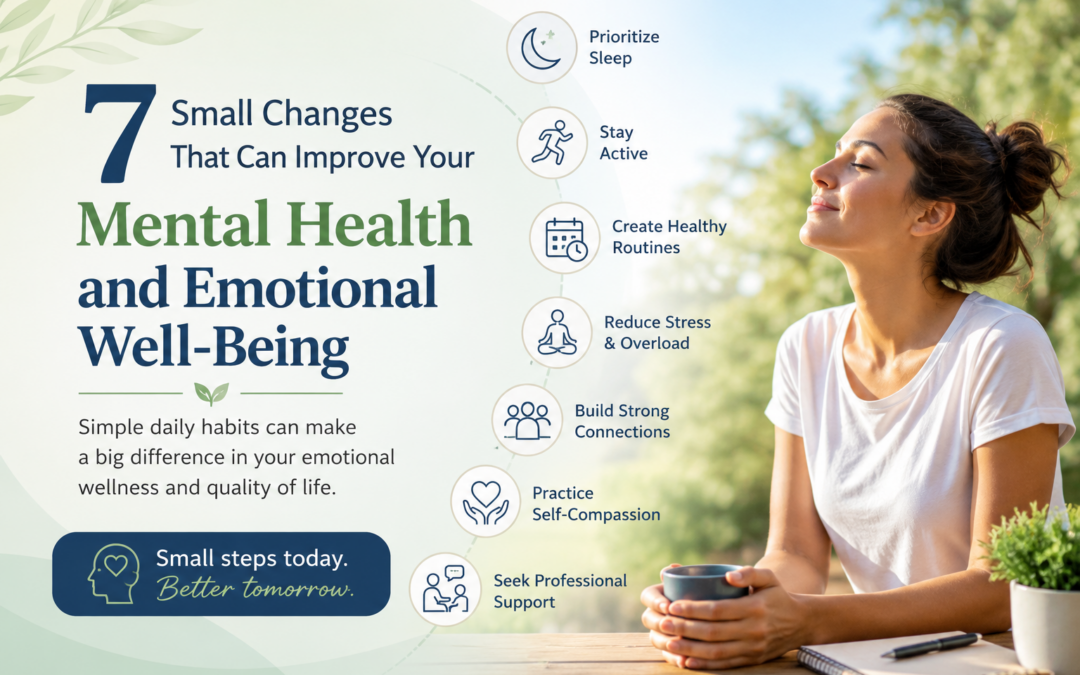
Maintaining good mental health doesn’t always require major life changes. In fact, small daily habits often have a powerful and lasting impact on emotional wellness. While life events can influence stress levels and mood, creating healthy routines and making intentional choices can strengthen resilience and improve overall well-being.
At Betterway Psychiatry & Psychological Services, we believe that emotional wellness is built through a combination of healthy lifestyle habits and professional mental health and well-being services when needed. Here are seven simple changes that can help support better mental health and emotional balance.
1. Prioritize Consistent Sleep
Quality sleep plays a vital role in emotional regulation, concentration, and stress management. Poor sleep habits may contribute to anxiety, irritability, mood swings, and difficulty coping with everyday challenges.
To improve sleep quality:
- Maintain a regular bedtime and wake-up schedule.
- Limit screen time before bed.
- Avoid caffeine late in the day.
- Develop a relaxing nighttime routine.
Healthy sleep habits support both physical and emotional wellness and can significantly improve overall mental health.
2. Stay Physically Active
Regular physical activity has a direct connection to mental health and emotional well-being. Exercise helps release endorphins and other brain chemicals that improve mood and reduce stress.
Simple ways to stay active include:
- Walking outdoors
- Stretching
- Yoga
- Cycling
- Dancing
You don’t need intense workouts to experience the benefits. Even moderate physical activity can increase energy levels, reduce anxiety, and promote emotional balance.
3. Create Healthy Daily Routines
A structured daily routine provides stability and predictability, both of which contribute to emotional wellness. Healthy routines can reduce stress and make daily responsibilities feel more manageable.
Helpful habits include:
- Eating regular meals
- Staying hydrated
- Scheduling breaks throughout the day
- Setting realistic goals
- Making time for hobbies and relaxation
Consistent routines can improve productivity and support healthier emotional responses.
4. Reduce Stress and Mental Overload
Today’s fast-paced lifestyle often leads to constant distractions, multitasking, and information overload. Over time, this can contribute to emotional exhaustion and chronic stress.
Ways to reduce mental overload include:
- Limiting unnecessary screen time
- Taking short breaks throughout the day
- Practicing mindfulness
- Setting realistic expectations
- Spending time away from social media
Creating healthy boundaries around technology and daily responsibilities can help improve focus and lower stress levels.
5. Maintain Strong Social Connections
Healthy relationships are essential for emotional well-being. Spending time with supportive friends, family members, or trusted individuals can reduce feelings of loneliness and improve mood.
Simple ways to strengthen social connections include:
- Checking in with loved ones regularly
- Having meaningful conversations
- Participating in community activities
- Seeking emotional support when needed
Strong support systems complement professional mental health services and help individuals cope with stress, anxiety, and life transitions more effectively.
6. Practice Self-Compassion
Many people are overly critical of themselves during difficult times. Constant self-judgment and unrealistic expectations can negatively affect mental health.
Practicing self-compassion involves:
- Treating yourself with kindness and patience
- Recognizing that setbacks are part of life
- Replacing negative self-talk with encouragement
- Allowing yourself grace during stressful situations
Developing a more compassionate mindset can strengthen emotional resilience and promote healthier thought patterns.
7. Know When to Seek Professional Mental Health Support
Lifestyle changes are important, but they are not a substitute for professional care. Persistent anxiety, depression, chronic stress, emotional burnout, or mood changes may require treatment from a qualified mental health professional.
At Betterway Psychiatry & Psychological Services, we provide personalized and evidence-based mental health and well-being services designed to help individuals achieve emotional wellness and improve their quality of life.
Our services include:
- Psychiatric evaluations
- Medication management
- Individual counseling
- Anxiety treatment
- Depression treatment
- ADHD evaluations
- Psychological testing
- Personalized treatment plans
Professional support can help individuals better understand their emotions, develop healthy coping skills, and regain control of their lives.
How Betterway Psychiatry & Psychological Services Can Help
Improving your mental health doesn’t require dramatic changes. Small, consistent habits such as prioritizing sleep, staying physically active, building healthy routines, and maintaining social connections can create a strong foundation for long-term emotional wellness.
When combined with professional mental health and well-being services, these daily habits can help individuals develop healthier coping strategies and improve their overall quality of life.
If you are struggling with anxiety, depression, stress, or emotional burnout, Betterway Psychiatry & Psychological Services is here to help. Our compassionate team is committed to providing personalized psychiatric care and emotional support so you can feel like yourself again.
Frequently Asked Questions
1) What are mental health and well-being services?
Mental health and well-being services include psychiatric care, therapy, counseling, medication management, and psychological support designed to improve emotional wellness and overall quality of life.
2) Can small lifestyle changes really improve mental health?
Yes. Consistent habits such as better sleep, regular exercise, stress reduction, and healthy routines can significantly improve mood, resilience, and emotional well-being over time.
3) When should someone seek professional mental health support?
Professional support is recommended when emotional challenges begin affecting daily life, relationships, work performance, sleep, or overall quality of life.
4) What conditions can psychiatric care help treat?
Psychiatric care can help manage anxiety disorders, depression, ADHD, bipolar disorder, trauma-related disorders, stress, insomnia, and other mental health concerns.
5) Why choose Betterway Psychiatry & Psychological Services?
At Betterway Psychiatry & Psychological Services, we provide compassionate, evidence-based care tailored to each individual’s unique needs. Our goal is to help patients achieve lasting emotional wellness and live healthier, more fulfilling lives.